Ho Chi Minh City has identified eight key tasks to achieve continuous double-digit economic growth for 20 years.
Ho Chi Minh City has set a target of achieving a minimum GRDP growth of 10% or more between 2025 and 2045, with per capita income reaching 75,000USD by 2045.
According to the Ho Chi Minh City Party Committee's report to the City Party Committee on the draft Action Program to implement Resolution 09 of the Politburo on building and developing Ho Chi Minh City in the new era, there are 8 key tasks to focus on in order to achieve the set goals.
The city also sets specific timelines for completing each task.
Ho Chi Minh City's economy will experience continuous double-digit growth for 20 years.
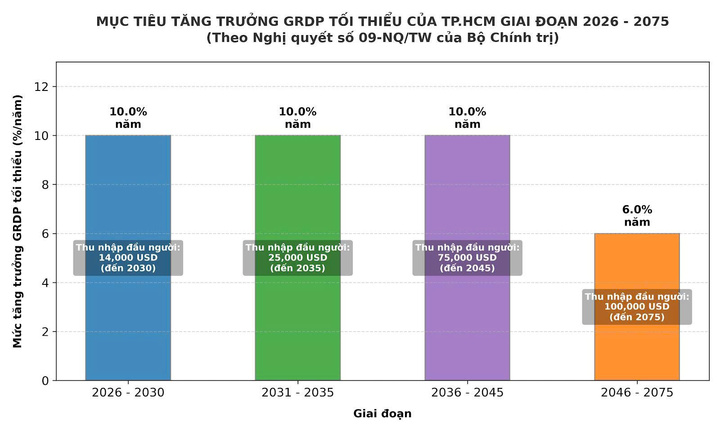
Resolution 09 sets a target for Ho Chi Minh City's economic growth of at least 10% per year for 20 consecutive years, from 2026 to 2045. Accordingly, in the period 2026-2030, the GRDP growth of Ho Chi Minh City will reach at least 10% per year.
By 2030, the GRDP per capita will reach at least 14,000 USD. Notably, by 2030, the digital economy will account for approximately 40% of Ho Chi Minh City's GRDP.
Resolution 09 sets a target for Ho Chi Minh City's economy to grow by at least 10% continuously for 20 years from 2026-2045.
This is also the period when Ho Chi Minh City has fundamentally resolved flooding, environmental pollution, traffic congestion, and achieved the goal of becoming a drug-free city.
During the period 2031-2035, Ho Chi Minh City's GRDP growth will also reach a minimum of 10% per year.
In this period, the per capita GRDP of Ho Chi Minh City will increase nearly 1.8 times, reaching a minimum of US$25,000. The digital economy will account for approximately 60% of the GRDP.
For the next 10 consecutive years from 2036 to 2045, Ho Chi Minh City will continue to maintain a minimum GRDP growth of 10% per year.
By 2045, the per capita GRDP will reach at least US$75,000, an increase of nearly 8.4 times compared to 2025 (in 2025, Ho Chi Minh City's per capita GRDP reached US$8,944, 1.7 times higher than the national average).
In the subsequent period, from 2046 to 2075, Ho Chi Minh City's GRDP growth must be at least 6% per year.
By 2075, the per capita GRDP will reach at least US$100,000. Indicators ensuring social equity, environmental protection, and the Human Development Index (HDI) will be above 0.9.
In addition to growth targets, Ho Chi Minh City will also complete many important connecting infrastructure systems, especially the connection of the urban railway system. Specifically, by 2030, Ho Chi Minh City must have approximately 200 km of urban railway lines, and by 2045, the entire metro system must be connected.
Currently, Ho Chi Minh City has developed a long-term development roadmap for urban railways. According to the Ho Chi Minh City Urban Railway Management Board, 187 km of metro lines will be completed by 2030.
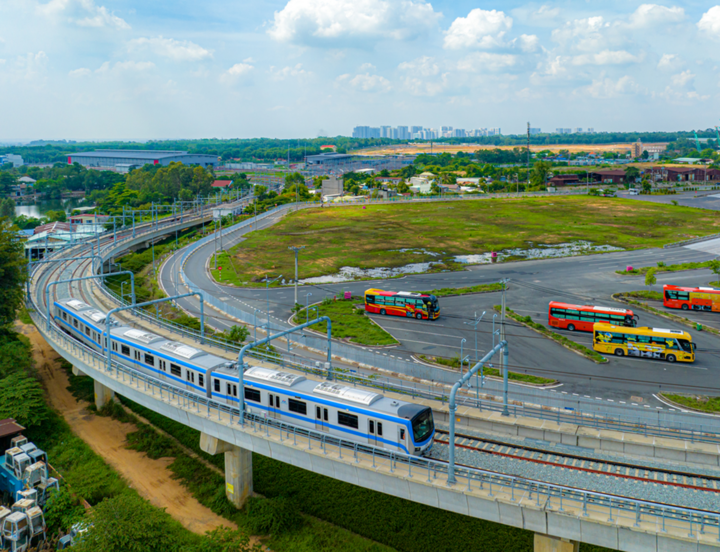
By 2030, Ho Chi Minh City will have approximately 200 km of urban railway.
By 2035, Ho Chi Minh City is expected to put into operation 14 metro lines, totaling approximately 462 km, and by 2045, the network will be complete with 19 lines, approximately 700 km.
The resolution also sets the goal that by 2045, Ho Chi Minh City will be a civilized and modern city; an economic, cultural, social, scientific, technological, and innovation center of Asia; and a globally attractive destination.
Towards the 100th anniversary of the Liberation of Southern Vietnam and the reunification of the country, by 2075, Ho Chi Minh City aims to be a global, smart, and comprehensively developed city, on par with developed cities worldwide...
Ho Chi Minh City is building a mechanism for accepting risks in science and technology.
To ensure development goals and achieve growth targets, Ho Chi Minh City has identified eight key tasks specifically for each stage.
Among them, new growth models and drivers are identified as the focus. Ho Chi Minh City is concentrating on developing a plan to transform its development model towards a knowledge-based economy, digital economy, data economy, green economy, and circular economy; developing the marine economy, low-level economy, and silver economy.
Strategic industry clusters are being developed, such as AI, semiconductors, big data, biotechnology, clean energy... and forming concentrated digital technology zones, innovation centers, and a synchronized science and technology ecosystem.
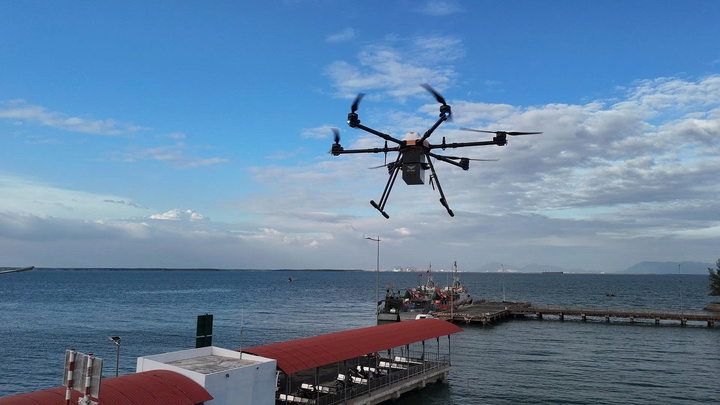
Ho Chi Minh City will build a risk acceptance mechanism in science and technology, with mechanisms to protect organizations and individuals participating in testing, in order to promote innovation...
Notably, to strongly develop science and technology and innovation, Ho Chi Minh City announced that it will build a risk acceptance mechanism in science and technology in 2026. At the same time, it will upgrade research infrastructure and technology exchange platforms...
Foreign direct investment (FDI) will continue to be promoted but with selective attraction, prioritizing high-tech projects with spillover effects; attracting large technology corporations to establish R&D centers and centers for technology development and mastery in the city.
New growth drivers have been identified, including the Ho Chi Minh City International Financial Center, the Cai Mep Ha free trade zone linked to logistics, and the Can Gio and Thi Vai international seaport and transshipment system...
The set of indicators for evaluating the new growth model will be completed in 2026, serving as a unified development management tool.
A series of breakthrough institutions will be issued.
The second task is to build breakthrough and superior institutions for the city's development in the new era. In particular, the Law on Special Urban Areas of Ho Chi Minh City will be finalized and submitted to the competent authority in July 2026, ensuring its submission to the National Assembly for consideration and approval at the nearest session in 2026.
Along with that, a comprehensive decentralization and delegation plan will be issued; clearly defining areas for strong decentralization such as investment, land, finance, planning, and organizational structure...
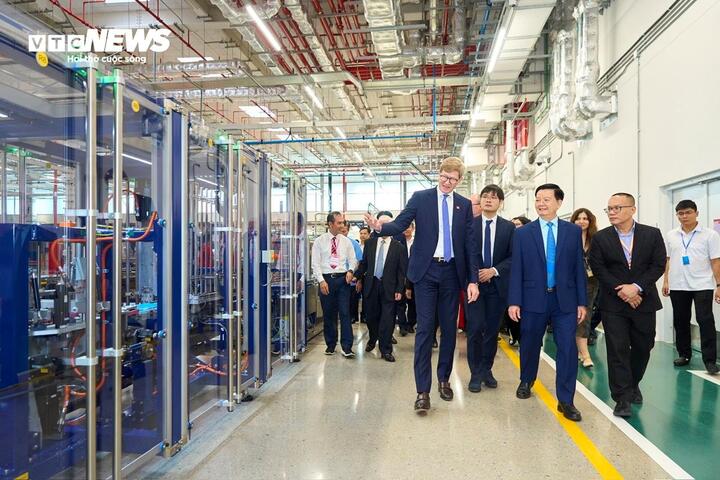
Foreign investment in Ho Chi Minh City in the fields of science, technology, and innovation is increasing at an unprecedented rate.
A controlled testing mechanism (sandbox) and a public-private partnership (PPP) investment mechanism will be developed and implemented. Priority will be given to and protection will be provided to organizations and individuals participating in testing, aiming to promote innovation and the development of new models.
Simultaneously, a plan for organizing a special urban government structure will be developed and implemented, linked to personnel management, job positions, civil service regulations, salaries, special income, and mechanisms to protect officials who dare to think and act; research will be conducted on piloting new management models and special administrative units... These mechanisms will be implemented starting in 2026.
The next key task is to develop Ho Chi Minh City with a long-term, stable vision linked to sustainable urban management and adaptation to climate change.
Ho Chi Minh City is actively implementing its Master Plan for City Development with a groundbreaking approach and a 100-year vision. According to the plan, the master plan will be completed in October 2026 and implemented during the 2026-2030 period.
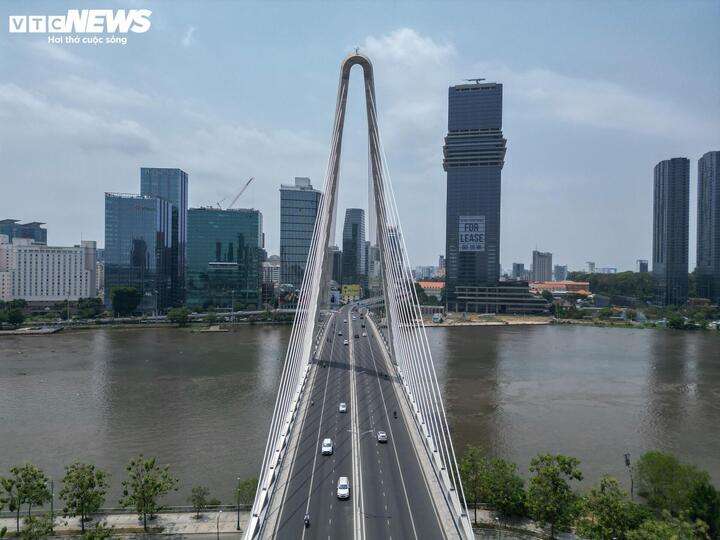
By 2075, the per capita GRDP in Ho Chi Minh City is expected to reach at least 100,000USD, approximately ten times the current figure.
Notably, the strategic infrastructure development plan for the period 2026-2030, with a vision to 2045, is specifically defined, including completing the inter-regional transportation network, key arteries connecting seaports, airports, industrial parks, and free trade zones... Simultaneously, the plan will implement ring roads, expressways, and national highways connecting within and between regions.
To ensure rapid and sustainable investment and development, the mobilization, exploitation, and efficient use of all resources are given special attention. Among these, developing the private and state-owned economies as important drivers of the city's economy is the first priority.
The city aims to form large economic conglomerates in the fields of high technology, finance, logistics, trade, and the digital economy...
Alongside economic development and ensuring growth, Ho Chi Minh City focuses on building a particularly developed, civilized, and modern urban area, improving the quality of life for its people. This includes the comprehensive development of culture and people in Ho Chi Minh City – civilized, modern, compassionate, as well as ensuring national defense, security, and international integration...
According to the Chairman of the People's Committee of Ho Chi Minh City, Mr. Nguyen Van Duoc, Ho Chi Minh City has a tradition of innovation, dynamism, and creativity, and has maintained double-digit growth rates for five consecutive terms, from 1991 to 2010 – an achievement few localities can match.
For example, in 1992, while the national GDP reached 8.7%, Ho Chi Minh City's GRDP was 11.7%.
In 1993, Ho Chi Minh City's GRDP reached 12.5%; in 1994, it grew strongly to 14.6%; in 1995, Ho Chi Minh City's GRDP reached 15.3%, the highest ever...
However, in the last three terms, the growth momentum has slowed down and shown signs of deceleration. Even so, the city has maintained stable growth and consistently led the national average, except for the "shock" of 2021 due to the COVID-19 pandemic.
From 2025 onwards, the economic situation is expected to improve again, especially in the first quarter of 2026, with a positive shift towards GRDP growth of 8.27%. This period is particularly crucial, opening up opportunities for the city to create major breakthroughs in the future.
Quang Huy
VTC News
https://cafef.vn/tphcm-xac-dinh-8-nhiem-vu-de-kinh-te-tang-truong-2-con-so-lien-tuc-trong-20-nam-18826060208015396.chn#img-lightbox-5