FDI Flows into Ho Chi Minh City – Part 1: A Prime Destination Attracting Next-Generation Capital
Throughout more than three decades of attracting foreign direct investment (FDI), Ho Chi Minh City has consistently led the country in both the number of projects and total investment capital. However, the majority of these capital flows remain concentrated in labor-intensive, low-value-added sectors such as textiles and garments, footwear, electronics assembly, and real estate.
As the city enters a new phase of development—particularly given that the growth model reliant on low-cost labor and tax incentives is no longer sustainable in the face of the global minimum tax—it is compelled to reshape its investment attraction strategy. A Vietnam News Agency (VNA) reporter presents a two-part series examining recent shifts in FDI flows into Ho Chi Minh City and the opportunities to attract next-generation investment once the city's international financial center becomes operational.
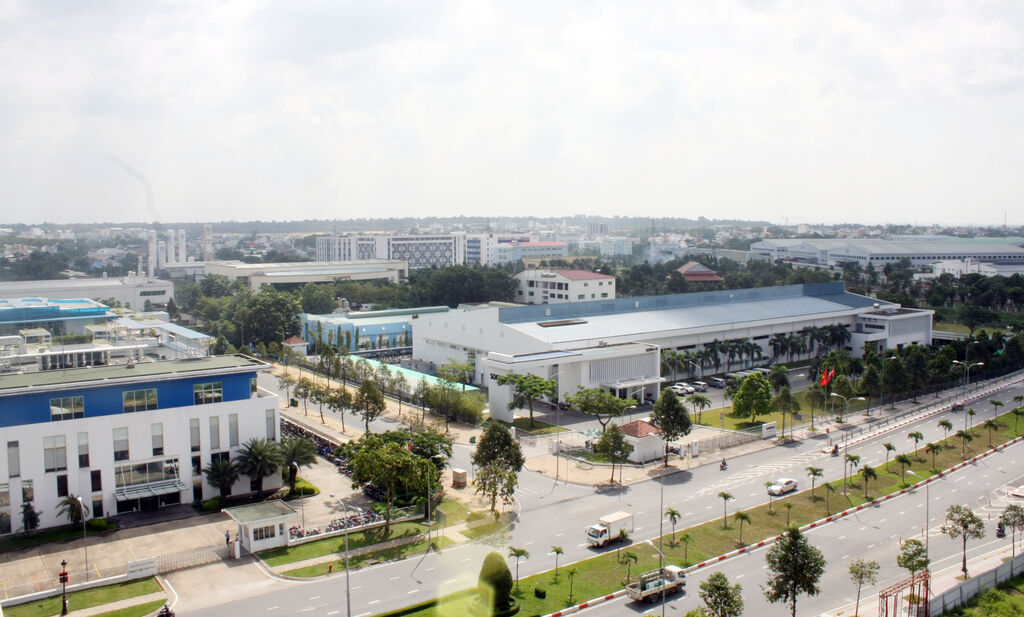
A view of the Ho Chi Minh City High-Tech Park, home to many of the world's leading high-tech corporations. Photo: Tien Luc/VNA
Article 1: A prime destination attracting a new wave of investment capital
Recent shifts in Foreign Direct Investment (FDI) flows into Ho Chi Minh City demonstrate the effectiveness of the city's strategy to attract investment selectively, prioritizing high value-added sectors. Ho Chi Minh City is not only maintaining its status as a top destination for FDI in Vietnam but is also gradually asserting its role as a regional hub for high-tech industry.
A base for major tech "eagles"
In early August 2025, SAP—a leading German technology corporation—officially launched its SAP Labs Vietnam Research and Development (R&D) center in Ho Chi Minh City. The company plans to invest over 150 million euros (approximately 4.5 trillion VND) in the center over the next five years.
SAP Labs Vietnam will play a pivotal role in supporting the development of SAP’s flagship products, including sustainable digital supply chain solutions and intelligent enterprise solutions powered by artificial intelligence (AI).
According to Thomas Saueressig, a member of the Executive Board of SAP SE responsible for Customer Services and Delivery, SAP Labs Vietnam is more than just an R&D center; it serves as a driver of transformation in Vietnam—one of Asia's most dynamic technology markets.
Mr. Saueressig noted that the decision to locate the new R&D center in Ho Chi Minh City was a strategic move, driven by Vietnam's impressive track record in technological innovation and its rapidly growing pool of software engineers.
The establishment of SAP Labs Vietnam, backed by a significant investment commitment and a clear strategy, further underscores Ho Chi Minh City's success in attracting this new wave of FDI. Recently, Ho Chi Minh City has attracted numerous "next-generation" investment projects. Notable examples include the microchip manufacturing equipment plant by BE Semiconductor Industries N.V. (Netherlands), with a registered capital of $42 million; the Amazon Data Services Vietnam project, which increased its capital by $48 million for data center operations; and the GSK Vietnam pharmaceutical project, which raised its investment capital by $133 million to expand production and supply capacity for high-quality pharmaceuticals.
A review of Ho Chi Minh City’s FDI history reveals that the establishment of the Saigon Hi-Tech Park (SHTP) in 2002 marked a turning point in the city's FDI attraction strategy. This move initiated a significant qualitative shift in FDI inflows—transitioning from labor-intensive models to sectors driven by high technology, advanced engineering, and innovation.
A host of major corporations—global "eagles" such as Nidec (Japan), Samsung (South Korea), and notably Intel (USA)—have selected SHTP as a strategic investment hub in the region.
Significantly, in 2010, Intel officially launched its $1 billion chip assembly and testing plant at SHTP, a milestone that positioned Ho Chi Minh City as a prominent destination on the global technology investment map.
The stable operations and continuous expansion of the Intel plant over the years serve as clear evidence of the effectiveness of the strategic investment attraction policies the city has steadfastly pursued—ranging from infrastructure incentives and a favorable investment environment to transparent, streamlined administrative procedures. According to Mr. Kenneth Tse, General Director of Intel Vietnam, after nearly 20 years of operations in the country, Intel’s facility at the Saigon Hi-Tech Park (SHTP) has exported over 4 billion units, contributing a total export value exceeding US$100 billion to the Vietnamese economy.
Intel Vietnam is currently integrating the corporation's latest technologies into its manufacturing processes. Notably, the facility has officially commenced production of the 18A chip series—the corporation's cutting-edge technology product line.
The production of this next-generation chip series not only affirms Vietnam's position in the global semiconductor industry but also opens up significant opportunities for accessing core technologies. Furthermore, it enhances the quality of the local high-tech workforce—a pivotal factor for Ho Chi Minh City to establish a semiconductor and high-tech ecosystem in the near future.
Experts believe that the increasingly extensive presence of global technology investors demonstrates that Ho Chi Minh City is on the right track with its strategy of selective FDI attraction, characterized by a clear orientation toward globalization.
Hua Chung
Tin Tuc & Dan Toc Newspaper – Vietnam News Agency (VNA)